Last year I worked with an IT company* whose sales team had split into two camps, and they defended those camps like it was religion. One half lived on cold outreach, firing connection requests at anything with a pulse and a job title. The other half had given up on that and sat back waiting for inbound, which is a strategy the way waiting for rain is in agriculture.
The board had been arguing about it for months to determine the best strategy. Meanwhile the pipeline stayed thin for months too, which should have settled the argument, but sales teams don’t work that way.
The cold callers were burning through lists and getting ignored, because they were reaching people who’d never heard their name. The inbound folks were waiting for a ring or message that never arrived, because nobody hands their business to a company they’ve never heard of.
Two different ways of being a stranger.
What we did instead
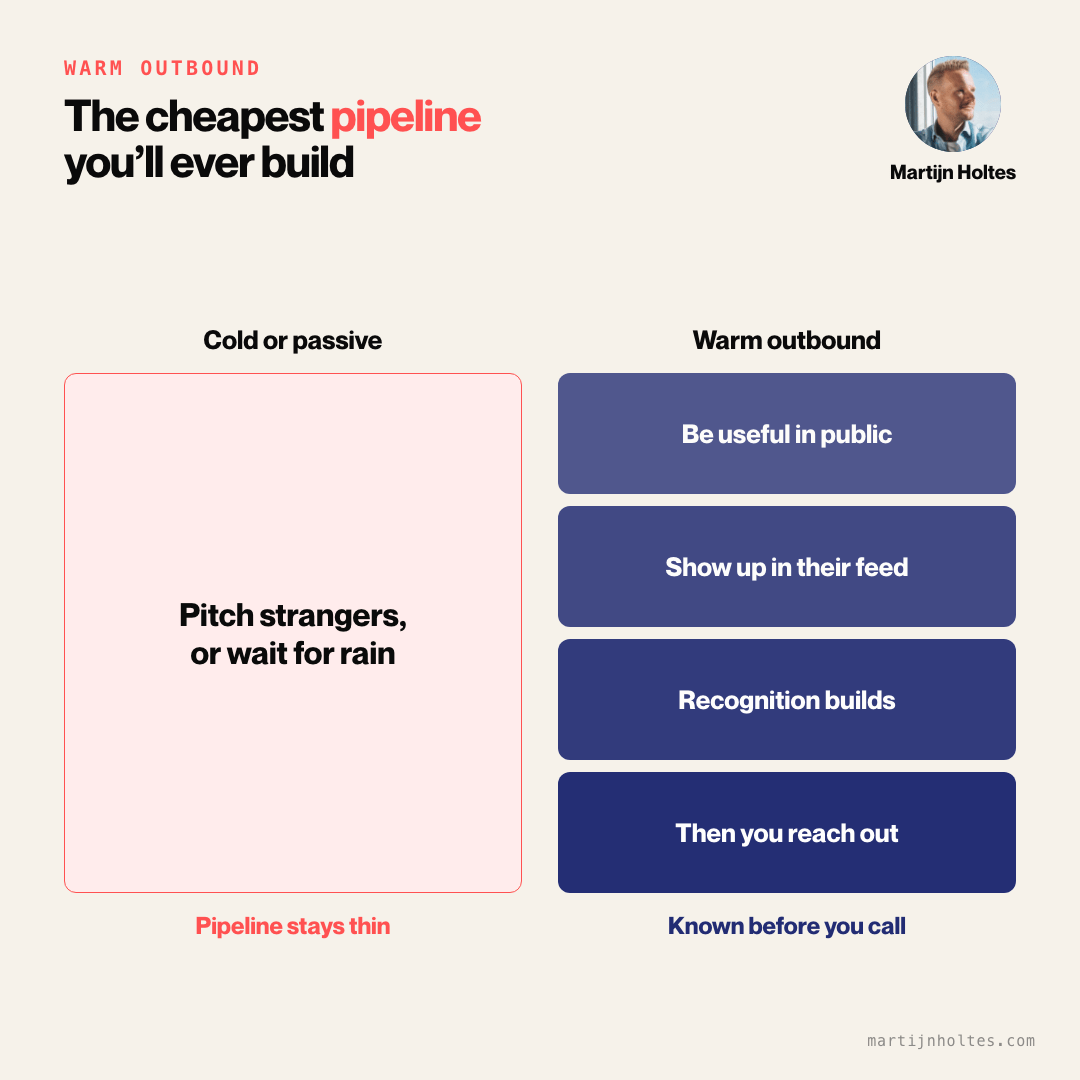
We stopped treating it as a choice between the two. The reps started being useful in their prospects’ LinkedIn feeds first. Posting and commenting on the real problems those buyers deal with all day, weeks before anyone mentioned the product. No “great post, thanks for sharing” BS, but the kind of content that makes someone think this person gets my issues.
For a while that was the whole job: be useful in public, in front of the exact people they’d wanted a call from.
Then they called. Same people as they would have cold-called, except now the name on the screen wasn’t a stranger’s. Call it warm outbound: outbound timing, except the prospect already knows who you are when you call.
Same team, same product, same list. The only thing that changed was that people knew who was knocking before they knocked.
Why teams skip the cheapest option
Being useful in public before there’s a deal in sight costs no budget, only patience and giving something away before you’ve earned the right to ask for anything, which is why most skip it.
Being visible and building an online reputation gets treated as marketing’s job, something that happens somewhere else. Yes, commenting eats hours too, but an hour of being useful keeps paying out for months, and an hour of dials is gone by lunch.
From what I’ve seen, the problem is that being useful never shows up on this quarter’s numbers, so it’s the first thing to get cut. There’s no number on the dashboard for the prospect who takes your call in three months because you were useful to them today.
Try putting “I was useful to a stranger in March” in the CRM and see what your sales manager thinks of it.
The grinding feels like work; that’s the trap. Even the rejection feels like effort. But when someone already knows your name and has a rough sense of how you think, the call stops being an interruption and becomes the next step in a conversation they were half in already.
So the fight those two camps were having was the wrong fight.
What matters is the thing underneath.
Do the people you want to sell to know who you are before you show up? Build that, and the pipeline gets cheaper every month, because rented attention expires the day you stop paying, and a name people know keeps working for free.
And no, you don’t need to become an influencer for this. Ten comments a week, in the feeds of the people you want to call, and the only thing a comment has to do is prove you understood the problem.
The cheapest pipeline you’ll ever build runs on people who already know your name before you call. For everything else, you either pay for one cold dial at a time or you sit by a phone that doesn’t ring.
*All examples are real. Names and industries changed to protect my clients’ privacy.