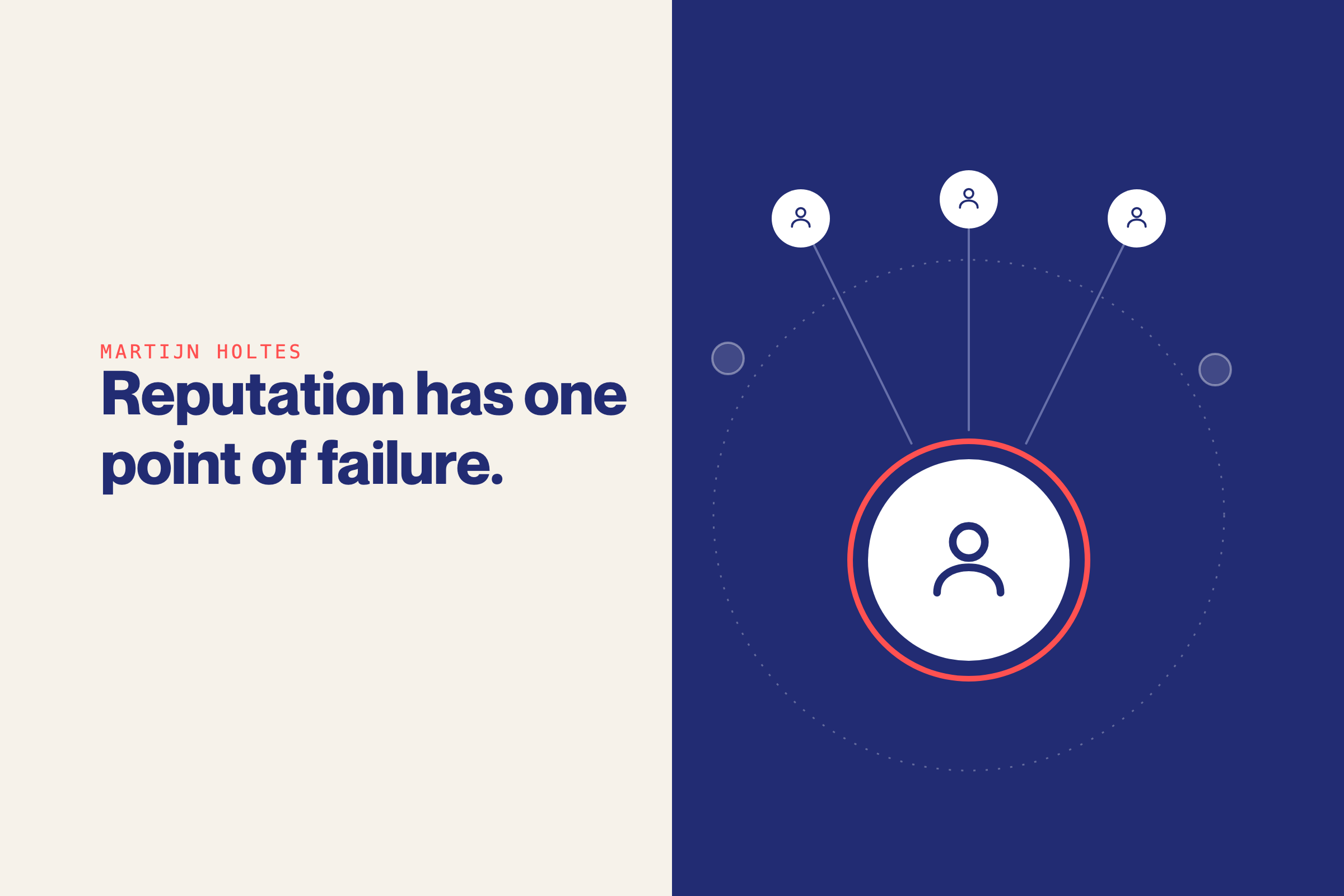
I teach companies how to show up on LinkedIn, and our own company page might be the loneliest place on the internet. I post there a few times a year, feel like I did a proper job for a day, and then go back to my personal profile, because that’s where the clients come from. Turns out I stopped believing in company pages years before I was ready to say that out loud.
Lucky for me, I did spend some serious time in those years learning about tech and innovation, and somewhere along the way I understood how blockchains work. I’m not going to play crypto influencer here, because I’m not one, but stay with me, because blockchain engineers figured out the exact problem your company has.
A dollar works because one central bank says it works, and your page works because one person keeps it alive. Crypto skipped that weakness on purpose. No head office, no server in a basement someone can switch off to bring the whole thing down. It runs on blockchains across thousands of machines that don’t answer to any center, so you can kill one part and the rest carries on like nothing happened.
Say I sneak into your accounts tonight and start switching things off, one by one, to see when a client notices. I unpublish the company page first. Nothing happens, because the last post was a birthday cake for the office manager and three colleagues liked it.
Then I “unplug” the personal account of a few business developers and consultants who have been posting once in a while, and by Friday you will see the numbers on your dashboard plummet.
So the page you maintain is decoration, and the people your clients listen to aren’t even in the plan. That’s your single point of failure.
It was never the page. It’s the two or three people who carry your brand, and nobody’s managing that.
You built it that way because control feels safe. One page, one logo, one careful voice that waits for approval before it says anything. I call it corporate broadcasting, and it’s exactly those messages nobody gives a crap about.
Kill the approval chain.
Now let’s say you spread that same message across the people who do the work, the partners, the consultants, and you get lots of voices with no off switch. Unplug one and the other 14 keep talking. That’s the crypto trick, minus the stupid coins.
People carry the company’s brand because they have something to say about the work they do every day. And when you help them do that, three things happen that a company page never will.
One message becomes many angles
The page says the thing once, in the approved way, usually six weeks after it mattered. Fifteen people who do the work say it fifteen ways. The one who runs the deals explains how the work gets done, the one who sits with clients explains why it matters to them, the one who trains the juniors shows what it’s like on the inside.
So the market hears a company that’s clearly good at what it does, confirmed from every direction at once.
It reads as help, not marketing
When someone shares their own point of view, in their own words, nobody reads it as an ad. Edelman has said the same thing for years: people believe the person long before they believe the logo.
That “these people know what they’re doing” feeling can’t be manufactured from a page everyone knows exists to make the company look good. It only shows up when it comes from a real person.
Every reputation feeds the next
Each person who builds a name makes the company look stronger, and a stronger company makes the next name easier to build. Rented reach, a.k.a. ads, stops the second you stop paying, but this lives in the relationships those people have already built, not in an account you have to keep topping up.
You can’t mandate any of this, and that’s the part most old school companies hate. The second you script people or drop them onto a posting schedule, you kill the thing that made it work, because a forced post is obvious and it does nothing for the author.
Give people a reason to want it, then get the hell out of the way.
Put the company’s name in the hands of the people who do the work, and there’s nothing left to unplug. And nobody’s grading you on the years the page did all the talking. The market only hears what comes next.
Anyway. I have a company page to go ignore.