
For most of my life, I assumed I wasn’t smart enough.
“Not stupid. Just not the kind of
person who builds things or has
influence.”

The starting point
I grew up as an average student.
While others seemed to follow instructions naturally, I was always the one asking the question that apparently had an obvious answer.
Standard processes felt to me like trying to read a map someone had drawn for a completely different world.
My perspective was shaped by this.
Smart people do big things.
I am not smart.
So I’ll have to find another way.
What I had instead was a stubborn need to be in charge of my own time.
At age ten, I already knew I wanted to work for myself so I had the freedom to decide what I want to do and when.
That drive didn’t come with a plan yet, but it was always there.
The leap
My first serious attempt was in the hospitality industry.
I was going to start my own restaurant.
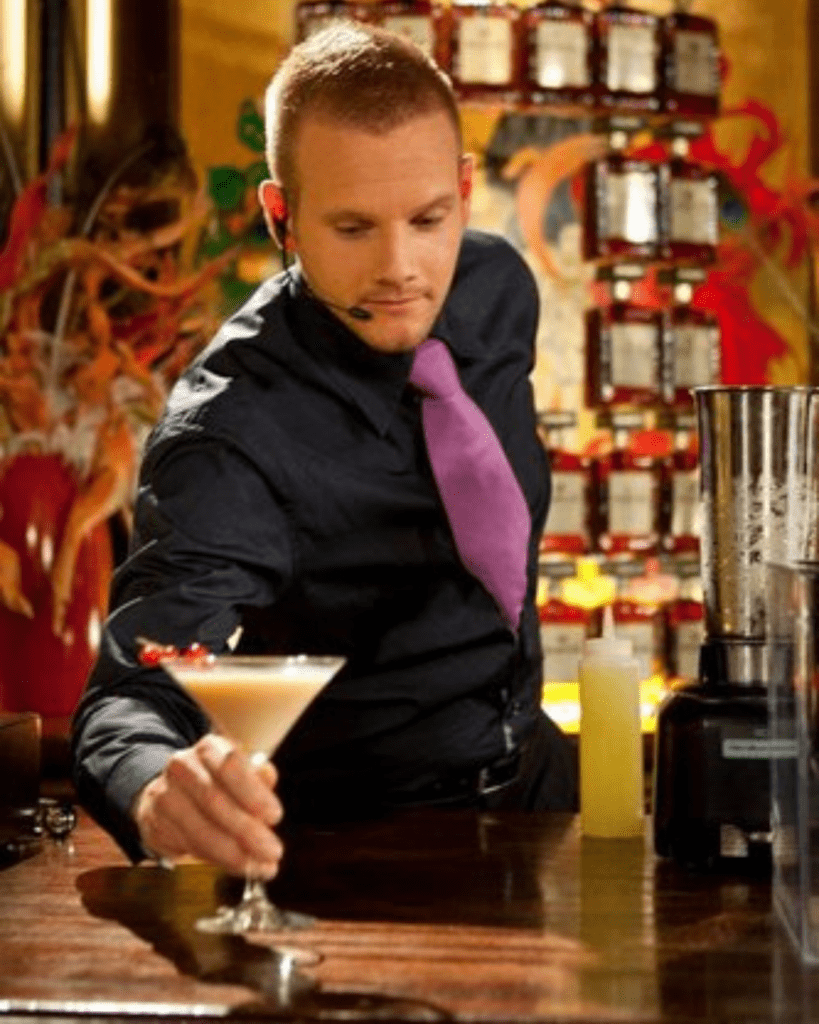
With no experience, I threw myself into it. I read and learned anything I could about professional bartending and worked my way up to make the top 100 in the Netherlands.
The investment for my own venue turned out to be to high for a young men of 28 and I decided to skip the plan.
Yet the entrepreneurial dream was seriously awakened.
Then, in 2010, it happened. Social media was the new shiny thing.
Instead of a 750,000 euro investment for my own business, I borrowed 5,000 euro from my dad, bought a laptop and off I went.
For the first time I had access to networks and attention that wasn’t reserved for people with the right degree or the right last name.
Anyone willing to show up and share what they knew could earn a place at the table.
Building it
In 2012 I joined Just Connecting, and in 2017 Richard van der Blom and I made a deliberate choice to go all-in on LinkedIn and B2B.
That’s where 98% of our work already lived.
Since then, we’ve worked with 1,000+ companies and helped 300,000+ professionals get visible.
Siemens, Capgemini, UBS, Nestlé, and Teva among them.
By most measures, things were working.
But I kept carrying a quiet question I couldn’t fully answer: why did some brilliant people stay invisible no matter what they tried?
The shift
A few years ago I got an ADD diagnosis.
Suddenly the map I’d been trying to read my whole life made sense.
It had just been drawn for a different kind of brain.
The “dumb” questions in meetings weren’t confusing, they came from a different angle.
The way I connected ideas from completely unrelated fields isn’t a distraction, it’s how I actually think.
I hadn’t been below average.
I’d been playing in spaces that weren’t built for how I work.
That realisation reframed everything I’d been seeing in my work for fifteen years.
Talented people, real experts, losing ground to louder, more mediocre competitors.
Not because they lacked ability, but because they were invisible in the rooms that mattered.
The best expert is not winning.
The loudest voice is.
That still drives me crazy.
So that’s what I work on.
Not platform tactics or hacks that’ll be irrelevant next quarter.
I work on the thing underneath all of that, helping experts take ownership of how they show up, who they show up for, and what they stand for.

Proof of ownership
I tested this on myself before I taught it to anyone else.
I trained with Wim Hof long enough to become an instructor of his method.
But what really moved the needle was me finishing 75Hard!
Twice!
Not because I liked it so much, but because I needed to prove to myself that the distance between where I was and where I could be wasn’t a matter of talent.
It was an ownership problem.
Mental toughness and taking ownership, to me, isn’t about being hard, tough, closed and an asshole.
It’s about having the courage to be who you actually are and doing the uncomfortable work of getting your potential out into the world instead of keeping it to yourself.
The best expert should win.
Not the loudest voice.
Everything I do connects back to that.
I think out loud on Substack
Frameworks, hard-won lessons, and the occasional rant about what’s broken in B2B. No fluff. No sales pitch.